How Seynabou Leads Girls in Senegal to Break Barriers Through Sport
The whistle cuts through the warm Sédhiou air. Seynabou strides across the football pitch, arms wide, calling out instructions to the teenage girls who sprint past her in bright kits. She claps once, sharp and decisive. The girls respond instantly, adjusting their formation and pushing harder. Watching her coach, it is impossible to imagine that just a few years ago, nobody recognised Seynabou as a coach at all.
In Sédhiou, one of Senegal's most rural regions, sport belongs to men. Of the 240 community sports clubs active in the region, almost every single coach is male. Girls who dream of playing football are told it is too rough, too dangerous, too unfeminine. Many are pulled from sport altogether — married off early or kept at home. Gender-based violence is common, and the girls who do manage to play often do so without equipment and without support.
Seynabou knows that feeling. Growing up, her own parents would not let her play. “That hurt me deeply,” she says. “And it still hurts today when I see young girls being told they can't play.” She refused to accept it. Instead, she began coaching girls in her village with no certification, no equipment, and little recognition.
Breaking Barriers In A Male-Dominated Game
Before 2019, Seynabou coached without formal support, leading a girls’ team that few took seriously. In a region where nearly all coaches are men, women’s participation in sports leadership remains extremely limited. In a region where nearly all coaches are men, women's participation in sports leadership remains extremely limited. This mirrors a global pattern — even in professional women's leagues, fewer than one in four teams is coached by a woman. In rural Senegal, that number is far smaller still.
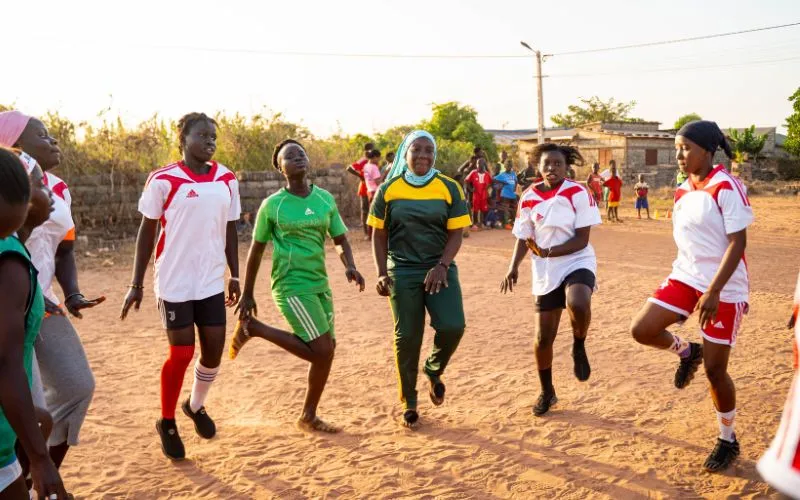
Through the RECAF-Jeu project, implemented by Right To Play with YMCA Senegal and funded by the Government of Canada, Seynabou received training in coaching, mentorship, and life skills. She earned her CAF D license, an internationally recognized entry-level coaching certification, and became one of around 30 women in the project to do so — a historic shift for women's sport in Senegal.
“The training developed me and opened doors for me.”
More Than A Coach
Alongside football drills, Seynabou runs life skills sessions that give girls a safe space to talk about menstrual health, early pregnancy, confidence, and gender equality. She also helps them understand how to respond to violence or pressure to marry early.
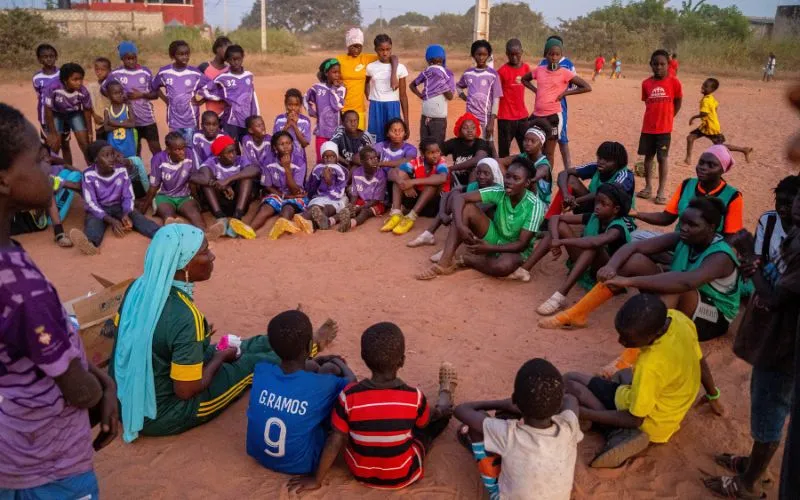
One of her players, Bea, 13, explains the impact: "Coach teaches us so much about growing up as girls. She teaches us how to take care of our personal hygiene. And how to protect ourselves from early marriage and violence."
"Coach teaches us so much about growing up as girls.”
Parents, too, are beginning to see the value. Through conversations and trust-building, Seynabou is helping families understand that sports can empower—not endanger—their daughters.
Creating Confident Girls And Stronger Communities
Today, Seynabou’s team is formalized and competing at the national level. But the biggest change isn’t on the scoreboard—it’s in the girls themselves.
They speak up in public, contribute at home, and make choices about their futures. Girls who once sat at the back of community meetings now raise their hands. Girls who were told to stay quiet are finding their voices.
“The girls speak confidently now. They are no longer afraid.”
The CAF D Licence has changed not just Seynabou's career — it has changed how her entire community sees her. "It brought me recognition and respect," she says. "When I speak, no one questions my qualifications or says I lack a degree." She is a certified leader, a trusted voice, and a role model for a new generation of girls who are watching.
“I want every girl who wants to play sports to have the full freedom to choose.”
She is helping to build that future—one training session, one conversation, and one confident girl at a time.
This story is made possible through the RECAF-Jeu project. The RECAF-Jeu project supports girls and young women’s inclusion in sports in Senegal and promotes gender equality, child protection, and life skills development through sport and play. The project is made possible with funding from the Government of Canada through Global Affairs Canada (GAC) and implemented in partnership with YMCA Senegal.
