Kadidia: The Teacher Who Learned to Teach All Over Again
The hands go up before she even finishes the question.
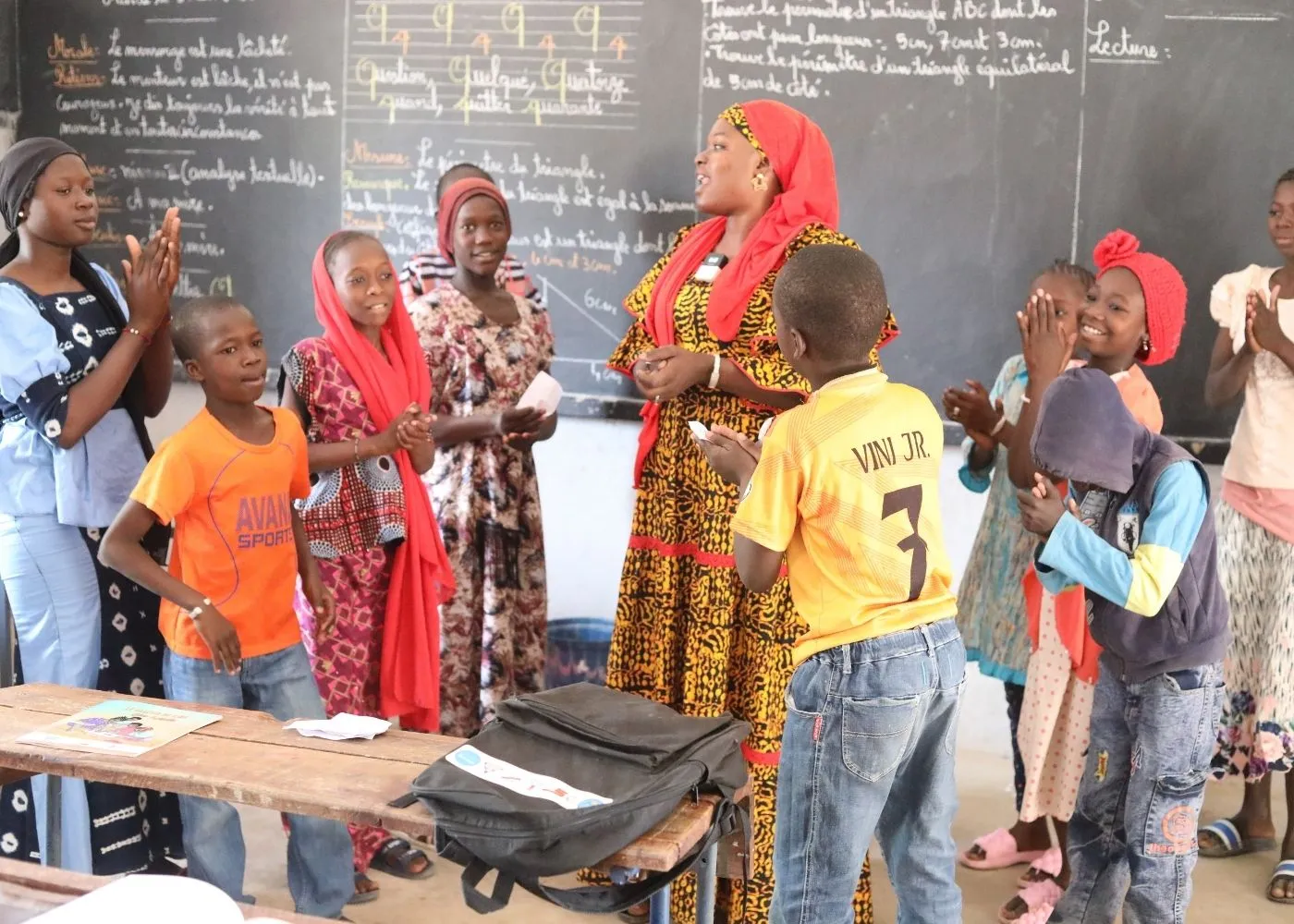
In Kadidia's classroom in Bandiagara, this is unremarkable now — children leaning forward, calling out, reaching for their books. It looks, from the outside, like a classroom that has always worked this way. It hasn't.
In Mali, years of conflict and displacement have quietly dismantled the conditions that make learning possible. Children arrive at school carrying disrupted histories: months without classes, teachers who fled, schools that closed. In Bandiagara, Kadidia watched this unfold in her own classroom. Then she watched class sizes swell as displaced families arrived, sometimes doubling the number of children in the room, each one with different gaps, different needs, and — in many cases — a different experience of fear.
Seventy-one per cent of Grade 4 students in Mali cannot read at the expected level. That number sits behind every lesson Kadidia teaches.
Before The Training
Kadidia is direct about what it felt like before. "We were facing challenges," she says. "Because of the insecurity, we received many displaced students in our schools and class sizes increased significantly, which made it difficult to manage these children and to maintain the attention of all of them."
The difficulty wasn't a question of commitment. It was a question of method. More children, more disruption in the room — and the same tools that had always worked, no longer working.
That's when Right To Play's EMPOWER project arrived in Bandiagara. Funded by Global Affairs Canada, EMPOWER works in conflict-affected communities across Mali to improve access to quality, inclusive education — not just by building learning spaces, but by transforming what happens inside them. For Kadidia, that transformation started with a training she didn't expect to change how she thought about her entire profession.
Learning To Teach Differently
The EMPOWER training didn't hand Kadidia a new curriculum. It handed her a new logic.
"I was trained by Right To Play on how to facilitate and manage reading clubs," she explains. "During these trainings, we were taught how to manage a classroom, how to facilitate reading lessons, how to motivate children to read and to write." But the core insight — the one that changed things — was simpler than any technique. "Through play-based learning, I learned that you can teach children while they are playing."
For classrooms full of children who have experienced displacement and trauma, this is more than a pedagogical preference. It's a practical necessity. "Through play, we were able to capture the children’s attention, even though many were still carrying stress from the hardships they had experienced," Kadidia says.
In one reading lesson, for example, Kadidia turns a simple vocabulary exercise into a movement game: she places words around the classroom and asks students to move in teams, acting them out, reading them aloud, and using them in sentences before moving to the next. Children who would normally hesitate to read aloud are suddenly participating — not singled out, but part of the energy of the group.
The children noticed too. Oumar, one of Kadidia's students, puts it plainly: "I like it when the teacher writes and teaches us through play." His classmate Anta is equally clear about what makes school feel different now. "What makes me happy," she says, "is when the teacher uses play to make it easier for us to learn reading and writing."
Neither child is describing entertainment. They are describing access — a way into learning that, before, felt closed.
"What makes me happy is when the teacher uses play to make it easier for us to learn."
What A Classroom Can Become
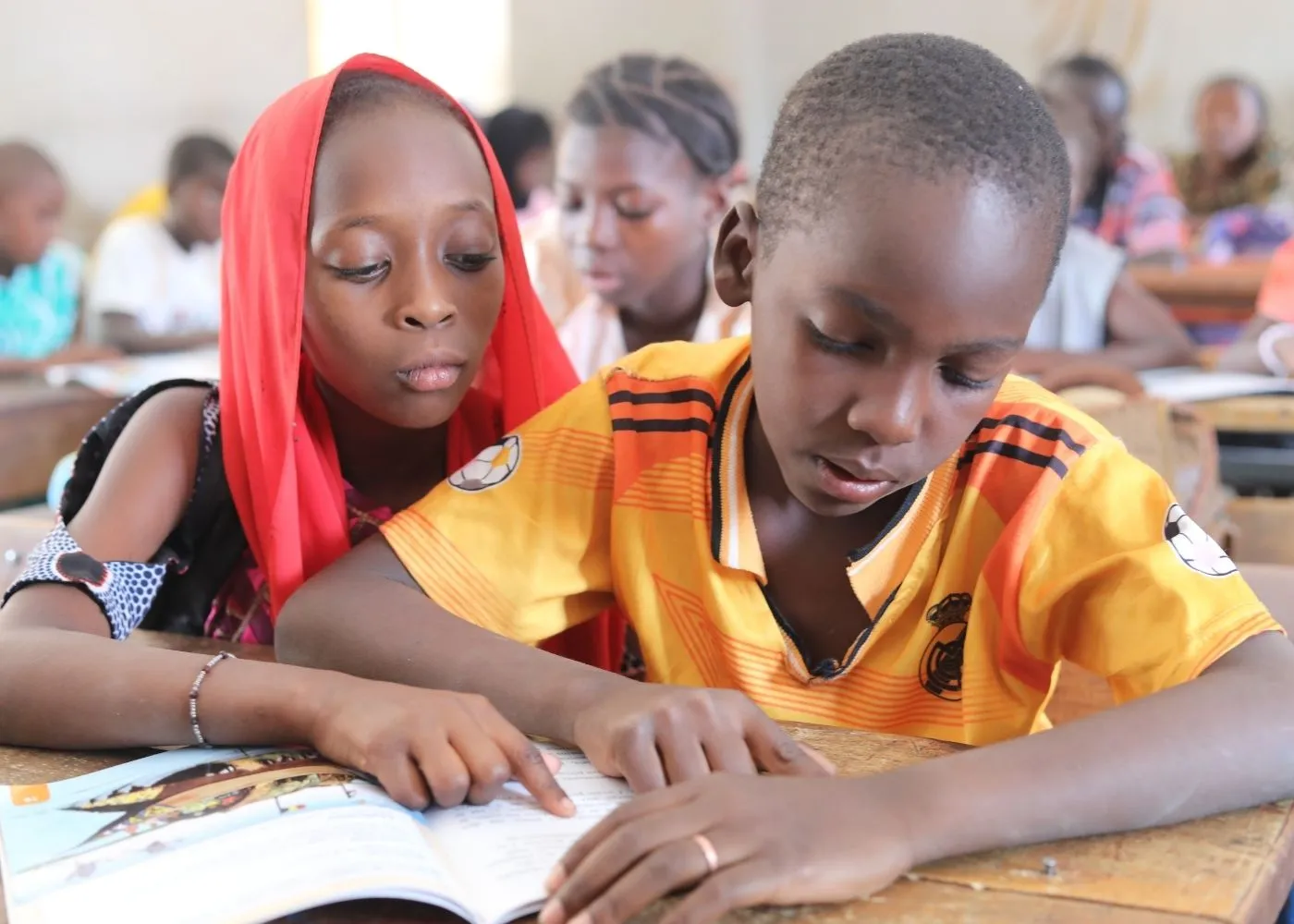
Kadidia now holds reading clubs alongside her regular lessons — sessions where children who came in months behind are finding their footing, not through repetition and pressure, but through movement, games, and the gradual confidence of feeling competent. Children who used to go quiet go loud. Children who used to avoid the board ask to write on it.
"How do you see the future of your students today?" was one of the questions she was asked during filming. But the answer was already visible in the room — in the raised hands, the open books, the children who had decided, somewhere along the way, that school was a place that was for them.
Kadidia didn't change her students. She changed the conditions that had been working against them. That distinction matters — and it's the one that EMPOWER is built on.
"Through play, you can capture the children's attention — and they are able to follow more closely."
The EMPOWER project supports conflict-affected and displaced children in Mali to access safe, inclusive, and quality education through teacher training, reading clubs, play-based learning, and community engagement. EMPOWER is generously funded by Global Affairs Canada.
