Fieldvisit Tanzania 2026
How does education change a child’s life? And what is needed to make that change last? A first-hand look on the ground.
In the week of 27 September 2026, long-standing supporters of Right To Play travelled together to the Mara Region with our athlete ambassadors Michelle Heimberg, Carlos Lima and Marco “Büxi” Büchel, who is also a member of our Foundation Board, as well as Foundation Board President Alexander Troller, National Director Annette Syz and Bernadette Werder, Senior Manager Finance & Operations.
The days on the ground moved us and gave us much to reflect on. The children’s joy and enthusiasm stood in contrast to difficult realities: overcrowded classrooms and deeply rooted social practices such as child marriage and female genital mutilation, which restrict girls in particular in their educational opportunities and future prospects.
Once again, being there made us realize why our work is so important.
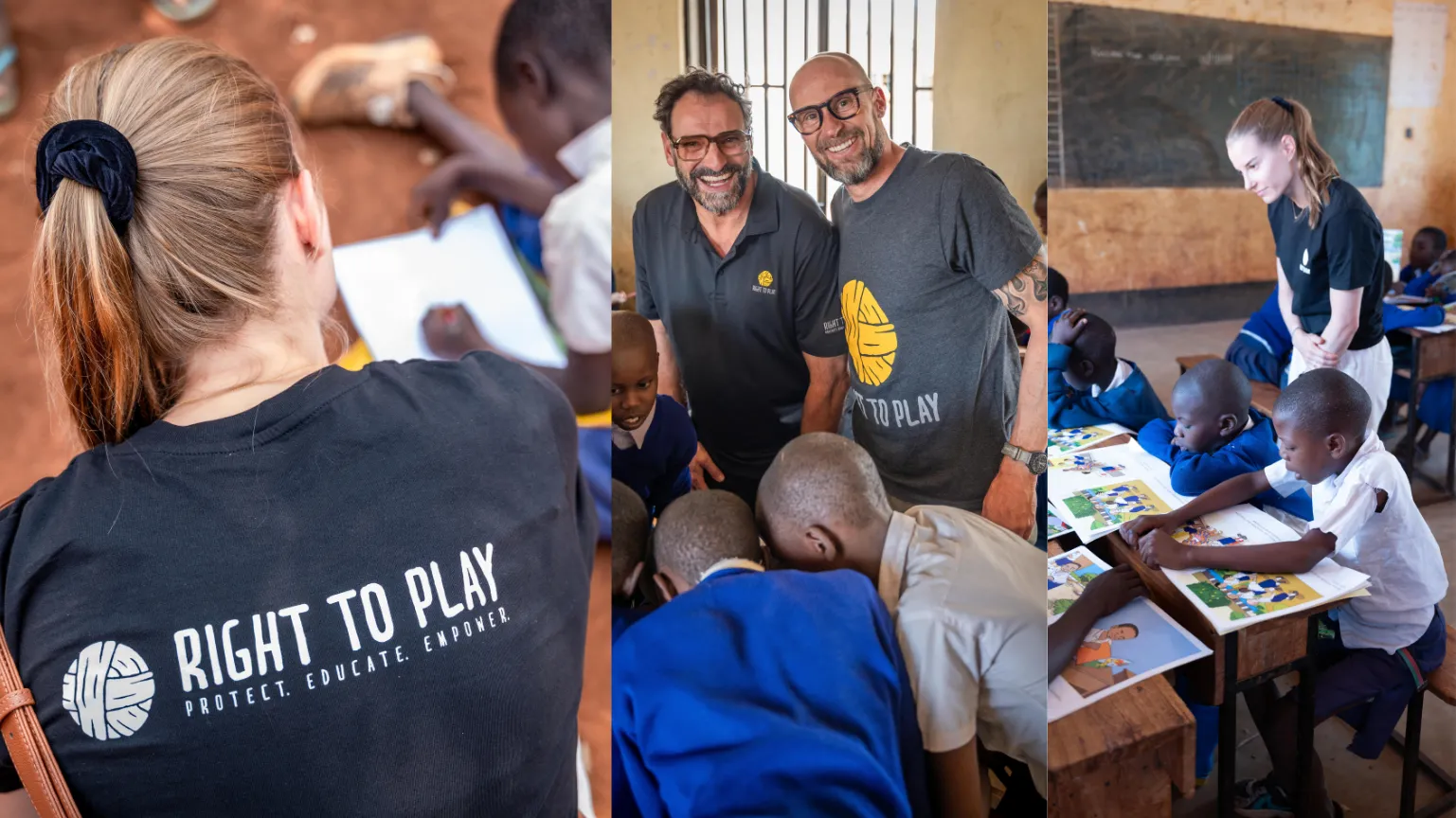
Learning with up to 120 children in one classroom
Over two days, we visited schools in Mugumu and Robanda and experienced how play-based learning works in practice.
In some classes, as many as 120 pupils learn together. Even so, the level of concentration is remarkable. At times it is so quiet that you could literally hear a pencil drop.
Then learning comes to life: the children work in teams, take on roles, sing, use rhythmic exercises and also learn outdoors. Listening becomes participation, and memorization becomes shared discovery.
The results of the earlier Enhancing Quality and Inclusive Education (EQIE) programme demonstrate the impact of these teaching methods. In project schools, for example, 79% of teachers asked open-ended questions, compared with 14% in comparison schools. Seventy-four percent enabled interaction among children, compared with 18% in comparison schools.
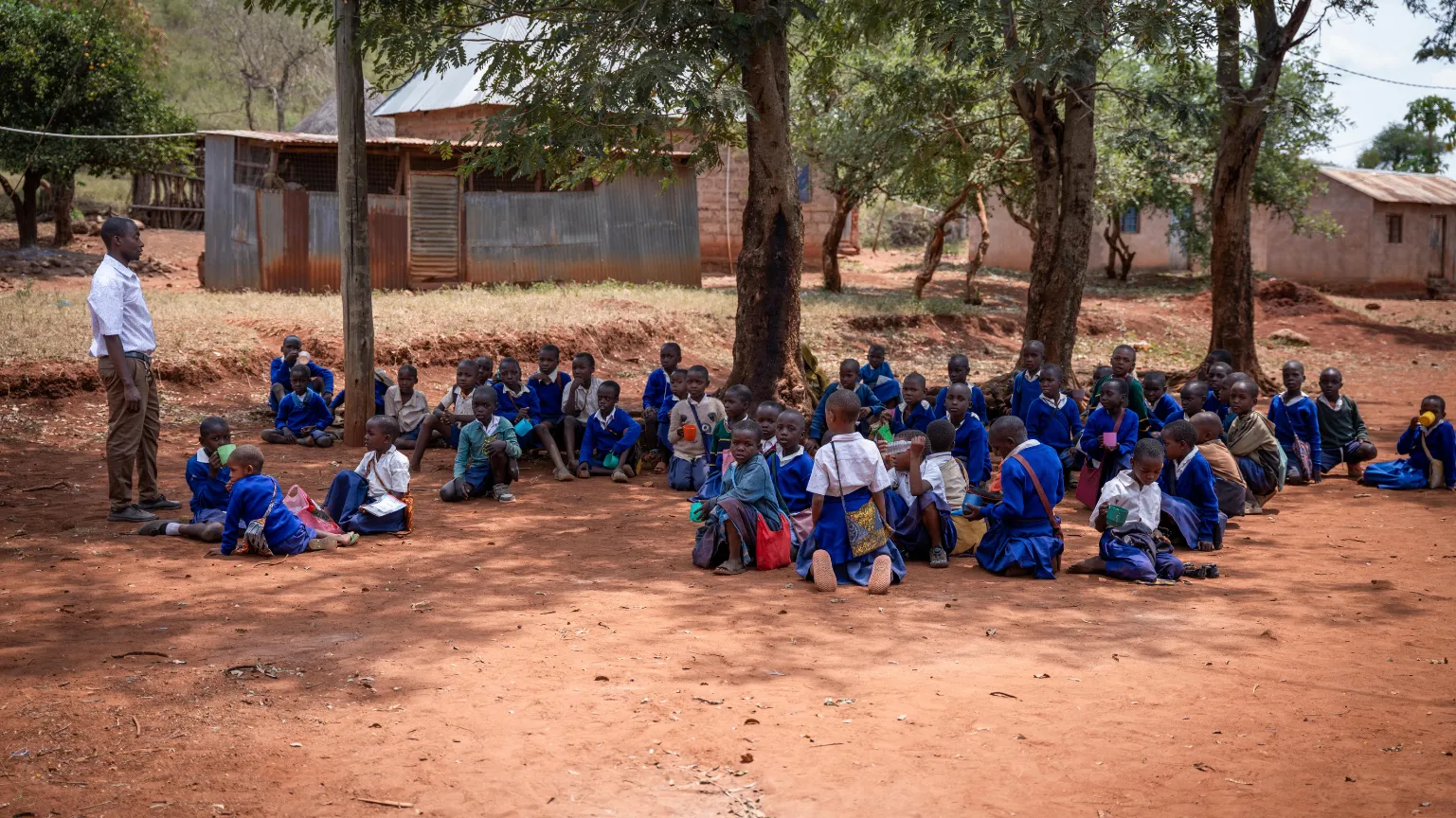
Kambaragi: Empowering girls and involving boys
Our visit to Kambaragi Primary School was especially memorable.
In the Girls’ Clubs, girls develop self-confidence and important life skills and are empowered to use their voices. Today, boys also deliberately take part in the weekly sessions. One important lesson from the first year of the project was that lasting change can only succeed when girls and boys are involved together.
Because gender equality requires more than knowledge. It requires new role models, self-confidence and a community willing to question familiar norms.
Game changes. Impact remains.
What we experienced on the ground is also reflected in the results of the Save Her Seat programme, which ended in March 2026.
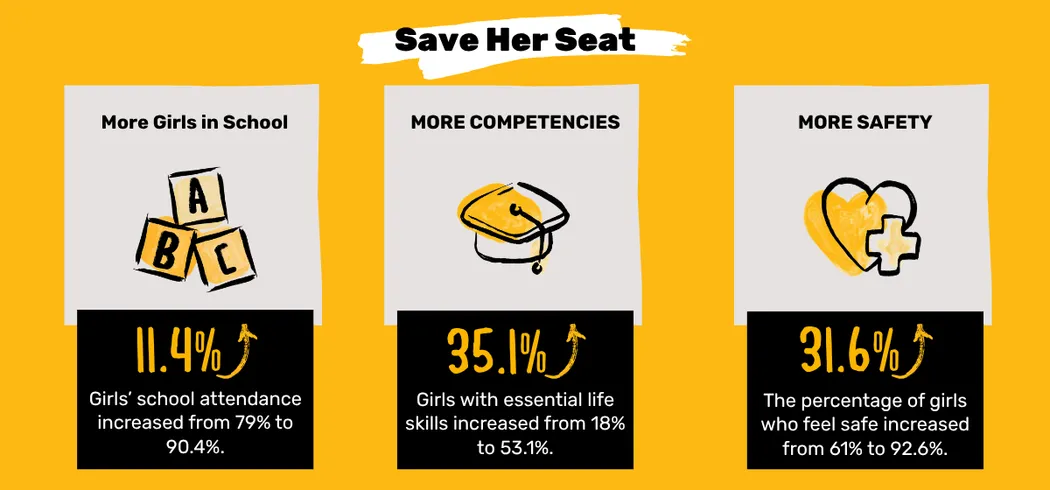
The wider environment is changing too: parental support for their daughters’ education rose from 44% to 79.2%. Among other things, parents reported reducing their daughters’ domestic workload so that they would have more time to study.
Impact is not created only in the classroom.
Inclusive education: Leaving no child behind
Equally impressive was our visit to an inclusive school where around 90 children with disabilities are taught and, in some cases, integrated into mainstream classes.
We saw how trained teachers and adapted learning opportunities give children with different needs access to education.
In total, Right To Play reached 41,696 schoolchildren in Tanzania in 2025/26, including 248 children with disabilities. In addition, 5,193 adults in the communities gained knowledge and skills to remove barriers to education for girls and children with disabilities.
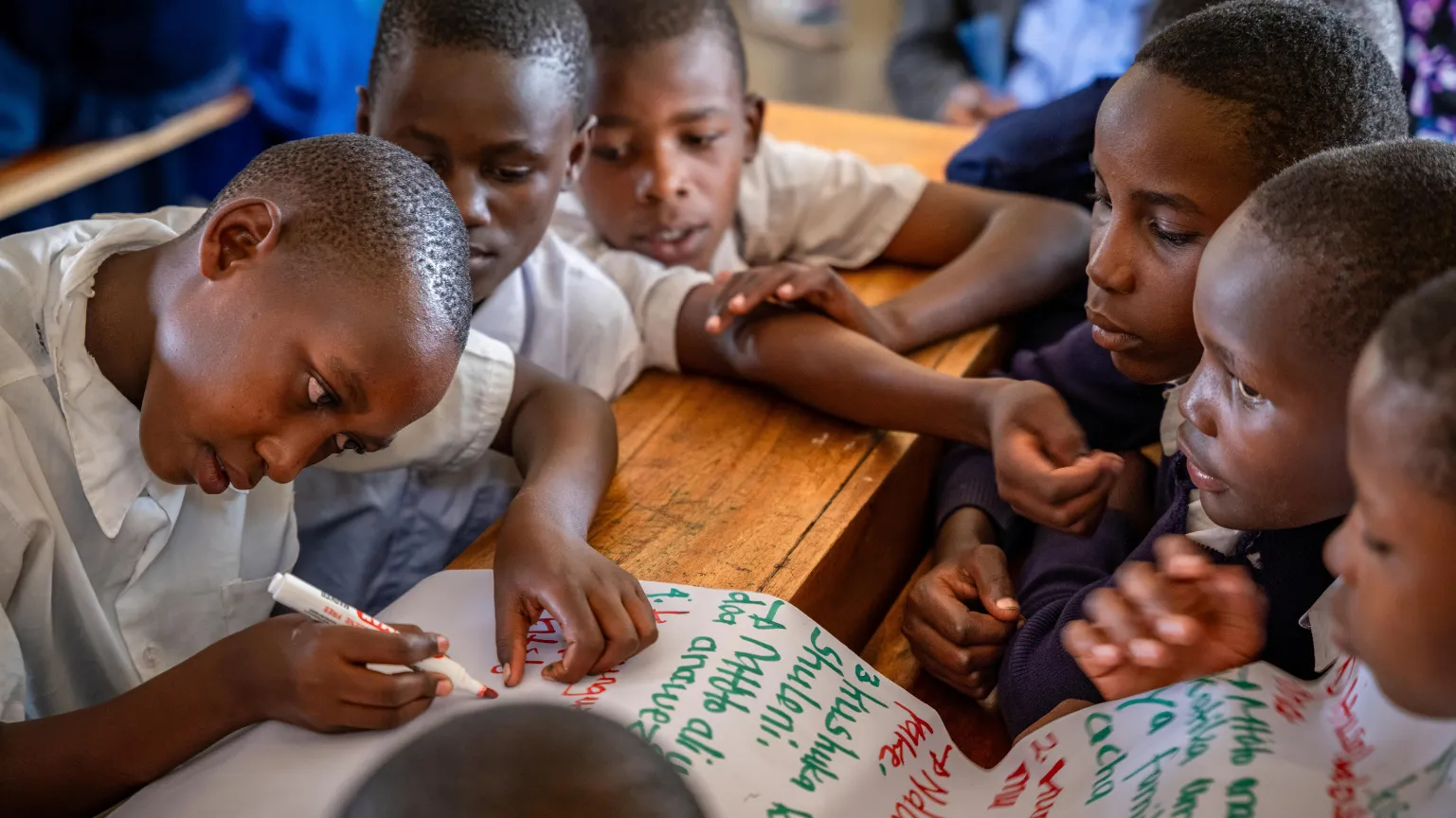
Change takes many players
Another important aspect of our school visits was the close involvement of local authorities: representatives from education, quality assurance and social services are included. Collaboration with government institutions and local authorities is part of Right To Play’s programme approach.
During our visits, representatives of the authorities observed the lessons and the teachers’ work. Afterwards, we were able to take an active part in joint feedback sessions.
These exchanges made it clear that lasting change is created when children, teachers, parents, communities and government institutions take responsibility together.
What remains
After these days, many impressions and moving encounters remain with us. Above all, so does the awareness of how much time, courage and collective commitment are needed for change to become truly sustainable.
We are also left with the certainty that it is worth persevering and giving children the opportunity to discover their abilities and help shape their own futures.
A heartfelt thank-you to Marco “Büxi” Büchel for the wonderful images that so vividly capture the special encounters and moments of this project trip.
It all starts with play.