Fighting for Her Future: Fatou’s Story
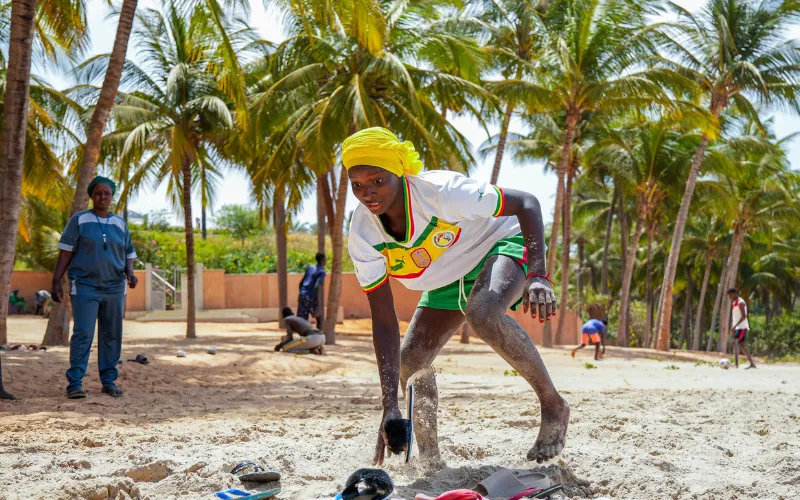
At wrestling practice on the golden sands of Cap Skirring’s beach, Senegal, 14-year-old Fatou plants her feet firmly and locks eyes with her training partner. She crouches low, lunges forward, and grips her opponent’s arms in a swift, practiced move. With a quick pivot, she throws her partner onto the sand. Fatou claps and laughs. She’s won this round. For Fatou, wrestling is more than training. It’s a way to reclaim her strength and challenge the expectations her community once placed on her.
But following this passion hasn’t been easy. Friends mocked her, warning she would never be able to have children if she continued wrestling. Neighbours called her names and said sports were no place for a veiled Muslim girl. Even her hijab became a challenge during her first competition, when it slipped and cost her the match.
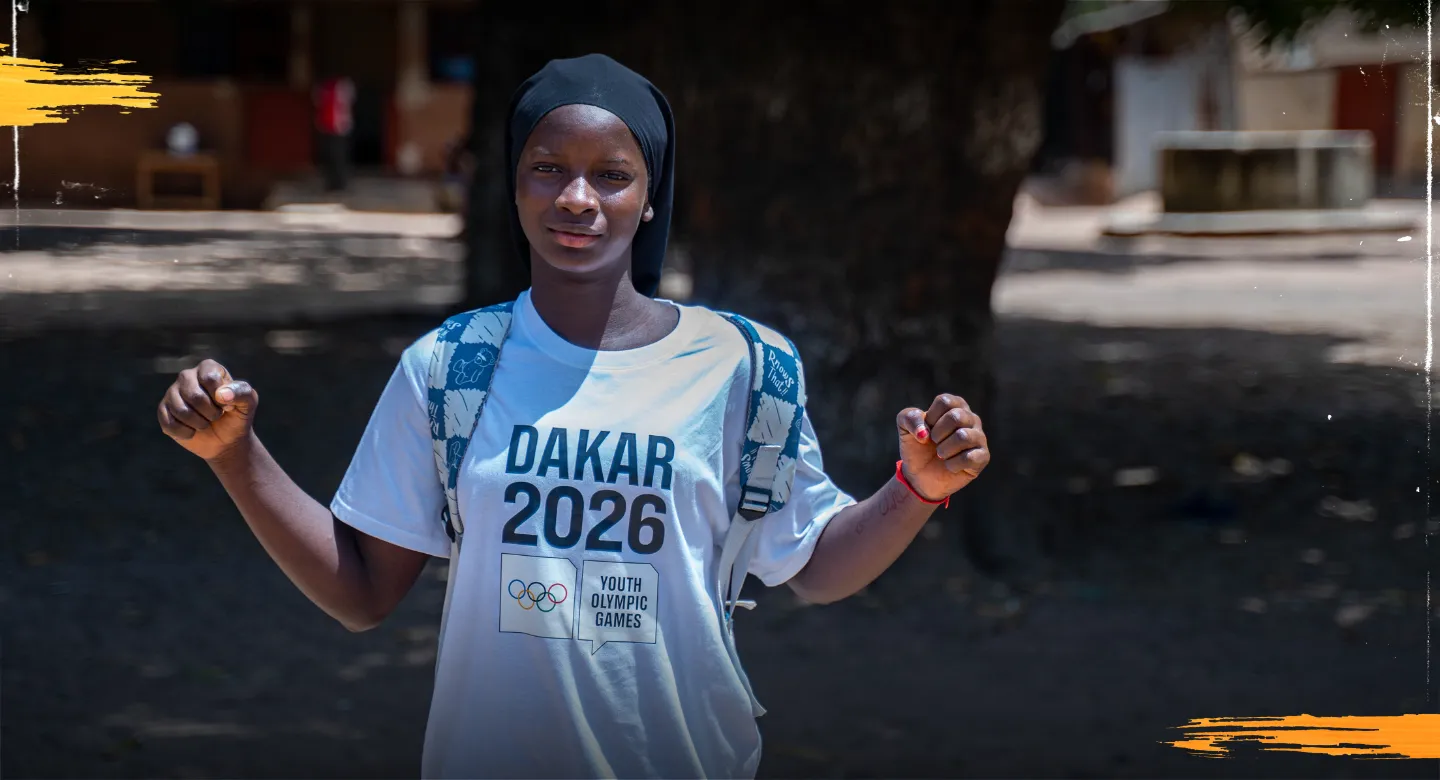
Despite the criticism, Fatou refused to let go of her dream. Today, she is a wrestler who got selected to represent Senegal at the Dakar 2026 Youth Olympic Games. With support from her parents and encouragement from Right To Play, she discovered the confidence and resilience to keep fighting, not just for herself, but for all girls who dream of stepping into the wrestling ring.
CHALLENGING NORMS AND FINDING STRENGTH
At nine years old, Fatou sat glued to the TV in her home in Cap Skirring, watching women wrestlers crowned as champions. Inspired, she declared to herself that she would follow in their footsteps. Wrestling became her dream.
"I faced a lot of challenges. My friends told me that girls who do sports wouldn’t be able to have children."
But in a country where harmful social and gender norms continue to limit girls’ choices, that dream came with a price. In Senegal, many girls are pressured into early marriage or face violence for defying expectations. 31% of women were married before the age of 18, and 9% before the age of 15.
“I faced a lot of challenges,” Fatou recalls. Friends and neighbors mocked her, saying sports were for boys and that girls who wrestled would lose their chance at motherhood. “My friends told me that girls who do sports wouldn’t be able to have children,” says Fatou.
Her neighbors went further, calling her names, questioning her morals, and claiming that sport wasn’t suitable for Muslim girls because of the gear.
Even her hijab became a test of her determination. During her first major competition in Saint-Louis, it slipped mid-match. Fatou chose to step back rather than continue uncovered, losing the match but staying true to her values.
"When my hijab fell, I felt so uncomfortable. I couldn’t continue. I had to lose the match just so I could fix it and cover my head again."
Through the RECAF-Jeu project, funded by Global Affairs Canada and implemented by Right To Play in partnership with the Liverpool Football Club Foundation, over 10,000 young people — especially girls — in Sédhiou and Ziguinchor are gaining confidence, leadership, and life skills through sport and play.
By creating safe spaces, providing sports gear and menstrual hygiene supplies, and coaching youth on life skills such as goal setting and resilience, the project supported Fatou to thrive.
“Right To Play taught us that when you have a goal, you must have self-confidence, clearly define it, and work hard to achieve it,” says Dieynaba, Fatou’s coach. “Since Right To Play started working with us, our team has grown stronger and more united.”
“They told me that if a girl wants to succeed in life, she has to set her goals and never give up," says Fatou about Right To Play.
BECOMING A ROLE MODEL
Coach Dieynaba has seen Fatou’s transformation first-hand. “When Fatou first joined the wrestling team, she was brave but had limited technical skills. She didn’t yet know how to position her body, defend properly, or read her opponent’s moves,” recalls Coach Dieynaba. “She also had little support in the community. People discouraged her, saying wrestling wasn’t for girls. But once Right To Play began supporting and training our team, everything changed. Fatou gained confidence, improved her technique, and became a role model. Now, all the young people want to be like her.”
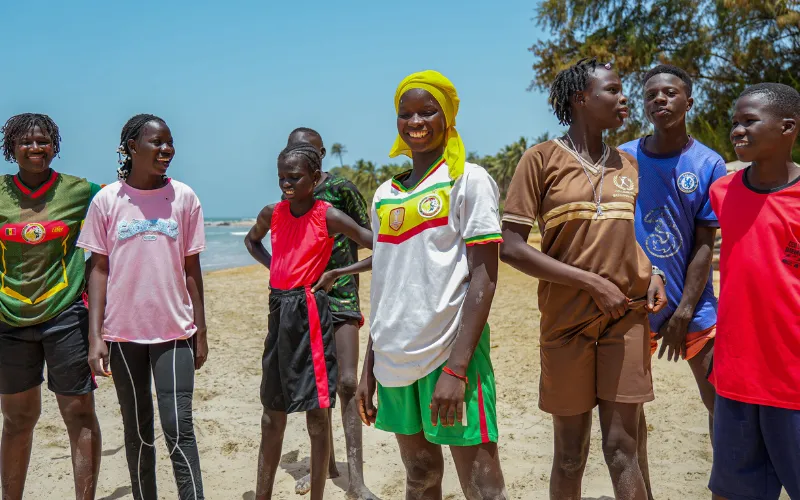
"Fatou’s transformation has inspired more than ten other girls and boys to take up wrestling."
For Fatou, the program’s life skills sessions were as powerful as her wrestling training. “I’ve learned about gender-based violence and how to protect myself and other girls,” she says. Now she shares those lessons with her friends, especially those facing pressure to give up sports.
DISCOVERING CONFIDENCE AND PURPOSE
Through Right To Play’s workshops on gender equality and violence prevention, Fatou learned that her voice matters — and that her dreams have power. “I’ve learned how to protect myself and help others," she says.
"Right To Play gave me courage — not just in sport, but in life."
Today, Fatou is known across her region not only as a talented wrestler, but as a mentor and advocate for girls’ inclusion in sport. She especially supports younger girls who wear the hijab, showing them that faith and sport can coexist.
Her dream now is to represent Senegal on the world stage and prove that girls from rural communities can rise to global heights while staying true to their culture and faith.
"I want to show that girls can do anything — even wrestle — and still be proud of who they are."
The Renforcement des capacités des filles par le sport et le jeu (RECAF-Jeu) project, implemented by Right To Play with funding from Global Affairs Canada, empowers young people, especially girls, in Sédhiou and Ziguinchor, Senegal to build life skills, promote gender equality, challenge social barriers and lead through sport. To date, it has reached over 10,000 young people.
